Loading...
Serving Altoona, PA and surrounding areas. (814) 552-1335
Altoona businesses lose heat and money every winter through under-insulated walls and roofs - we assess your building, recommend the right material, and handle permits so you can focus on running your operation.
Commercial insulation in Altoona slows heat movement through your building's walls, roof, and floors - reducing heating costs, eliminating cold spots, and improving comfort for everyone inside, with most small-to-midsize office and retail jobs completed in one to three days.
For a building in Blair County, insulation is not a once-and-done upgrade - it is one of the most reliable ways to control energy costs year after year. A properly insulated building requires less from its heating and cooling equipment, which also extends the life of that equipment and reduces maintenance calls. The U.S. Environmental Protection Agency notes that good insulation also improves indoor air quality by reducing humidity swings and the drafts that introduce outdoor pollutants into occupied spaces.
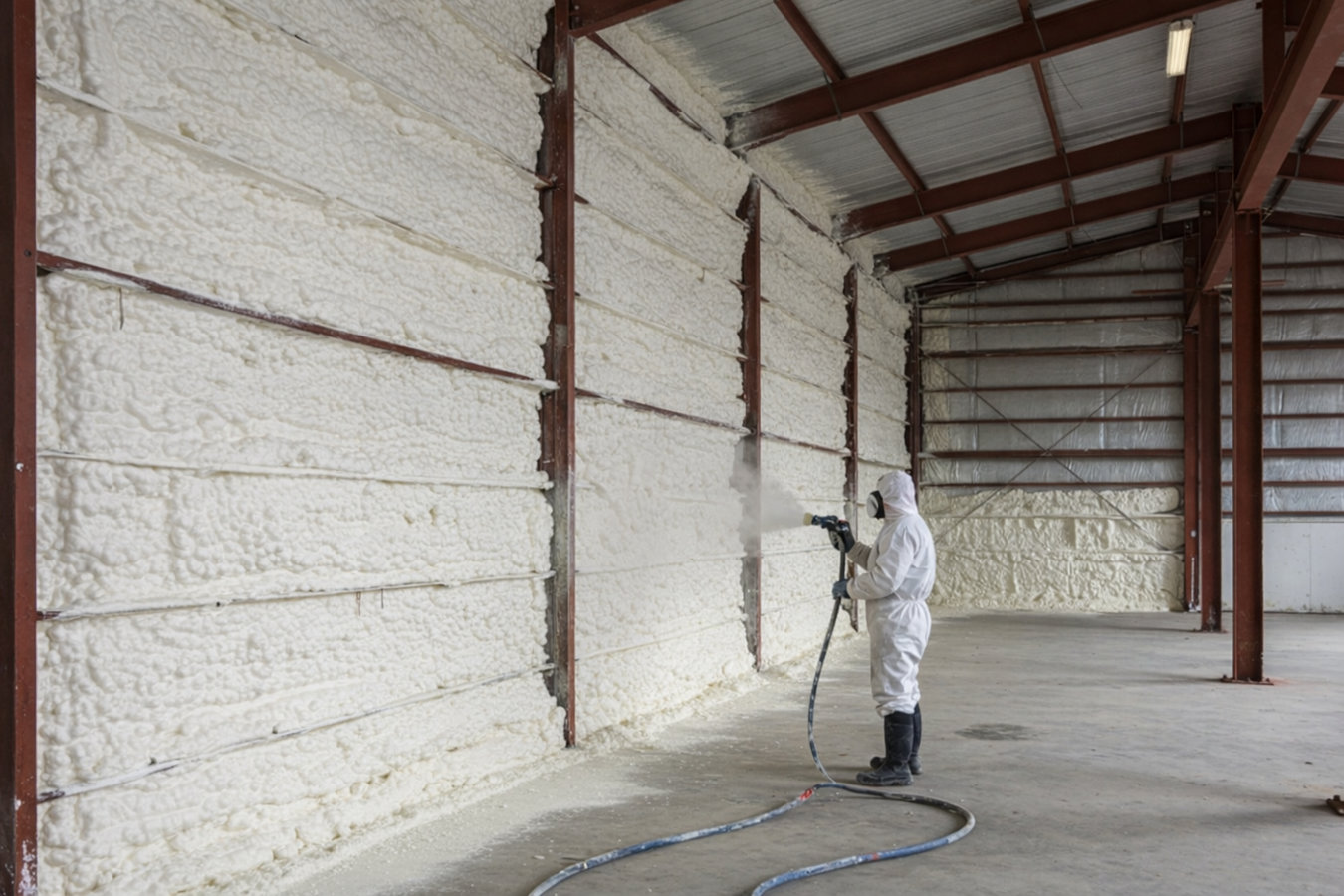
We work on commercial buildings across the Altoona area, using spray foam for air sealing and irregular spaces, blown-in fiber for large attic areas, and rigid board where continuous insulation is needed. If your building also has residential units or crawl space access points, we can address those in the same project alongside your crawl space vapor barrier needs.
If your natural gas or heating costs have risen year over year - or are noticeably higher than similar buildings nearby - poor insulation is one of the most common causes. Altoona winters are long and cold, and a commercial building that is not properly insulated against the mountain climate forces its heating system to work much harder than it needs to. If the HVAC has been serviced and bills are still high, insulation is the next place to look.
Cold spots near exterior walls, in corner offices, or in spaces directly below the roof are a classic sign that insulation is thin, missing, or has settled over time. In Altoona's older commercial buildings, it is not unusual to find walls that were never properly insulated. If employees or tenants consistently complain about one area being uncomfortable no matter what the thermostat says, that is worth investigating before the next heating season.
Drafts mean air is moving through gaps in your building's envelope - and where air moves, heat follows. This is especially common in older Altoona commercial buildings where original construction did not include modern air-sealing techniques. Run your hand along the edges of exterior windows and doors on a cold day - if you feel cold air moving, you are losing heat and paying for it every month.
Moisture problems inside walls are often linked to insulation failures, especially in a climate like Altoona's where freeze-thaw cycles push water into building assemblies repeatedly. Staining on interior walls near the ceiling or floor, a persistent musty smell in certain rooms, or visible condensation on interior surfaces are all signs that moisture is getting in and that the insulation and air barrier may need attention.
Not every commercial building needs the same solution. We start with a site visit to understand your building's construction, what areas are losing the most heat, and what your budget and timeline look like. For older Altoona buildings with irregular framing and open air gaps, spray foam is usually the right tool because it fills every void in a single pass. For large open attic areas above drop ceilings, blown-in fiber covers more square footage quickly and cost-effectively. Rigid foam board makes sense in specific wall and roof assemblies where a continuous layer of insulation is required by the building code or by design. Businesses looking for the highest-performance option across their whole building often pair spray foam at the perimeter with spray foam insulation in the field areas where sealing and insulating need to happen together.
For buildings with crawl spaces or below-grade storage areas, we can also address moisture management in the same project. A crawl space vapor barrier installed alongside commercial insulation work prevents ground moisture from working its way into the building envelope - a concern in Altoona's terrain, where many commercial properties sit on sloped lots with drainage challenges. We handle the full scope and pull any required permits, so you are not coordinating multiple contractors.
Strong choice for older Altoona buildings where air sealing and high R-value per inch are both needed, especially in irregular or hard-to-reach spaces.
Cost-effective for commercial attic spaces with large open areas where high-volume coverage is more important than thickness.
Well-suited for flat roof assemblies, continuous exterior insulation, and wall systems where a consistent thickness is required.
Many commercial buildings benefit from a mix of materials - spray foam for air sealing and hard-to-reach gaps, blown-in or board for field areas.
Altoona sits in Blair County in the Allegheny Mountains, where average January lows drop into the single digits in cold years and natural gas is the dominant heating fuel for most commercial buildings. That combination - extreme cold and a volatile fuel price - means a poorly insulated building is expensive in a very direct way, month after month, from October through April. Altoona's commercial core also includes a significant number of buildings constructed in the early-to-mid 20th century, before modern insulation standards existed. Some of these buildings have little or no wall insulation at all, and what was originally installed in others has settled or degraded over decades. For businesses in State College and other communities we serve across central Pennsylvania, the same older building stock and climate conditions apply.
Pennsylvania enforces the state Uniform Construction Code for commercial properties, and Altoona handles permitting locally. For any project that involves opening walls or modifying the building envelope, a permit is typically required before work begins - and a contractor who knows that process and handles it for you is protecting you from compliance problems down the road. Businesses in Johnstown and across the region face the same permit requirements and benefit from the same approach. The Pennsylvania Department of Labor and Industry publishes the current commercial building code requirements if you want to review them before your estimate.
When you reach out, we ask about your building type, size, what problems you have noticed, and what you want to accomplish. This helps us determine whether a quick phone quote is appropriate or whether a site visit is needed first. For most commercial jobs, a site visit is the right starting point - expect to schedule one within a few days.
We visit your building to check existing insulation, look for air leaks, and assess the areas that need work. This typically takes one to two hours depending on building size. You receive a written proposal that outlines the scope, materials, and total cost - no verbal quotes that shift when the crew shows up.
If the project requires a permit under Altoona's local building code - common for work that involves opening walls or modifying the building envelope - we handle the permit application and keep you updated on the timeline. Work does not begin until the permit is in hand.
The crew works in the areas identified during the assessment. Depending on scope, this may take a single day or several days. Before any walls or ceilings are closed up, you have the opportunity to inspect the work. We coordinate the required city inspection if a permit was pulled, and walk you through the finished project before leaving.
Free on-site assessment, written proposal before any work begins, permit handling included - no surprises on the invoice.
(814) 552-1335We do not give firm prices over the phone for commercial jobs. Every written proposal follows an in-person walk of your building. That is the only way to give you a number that reflects what the job actually involves - not an estimate that grows once the crew is on-site.
Altoona's commercial core includes buildings constructed from the early 1900s through the mid-20th century, many of which were built before modern insulation standards. We know how these buildings are put together - the wall assemblies, the attic access, and the moisture challenges - and we know what questions to ask before recommending a material or approach.
For commercial work requiring a permit under Pennsylvania's building code, we handle the application and coordinate the required inspection. You do not need to navigate the permit process yourself. Work meeting code standards - verified by an independent inspector - protects you if you ever sell the building, refinance, or file an insurance claim. The North American Insulation Manufacturers Association publishes commercial installation standards our work is built on.
North American Insulation Manufacturers AssociationFor commercial work that requires a permit, we handle the application and coordinate the required inspection. We document the finished work so you have a clear, verifiable record before signing off on any commercial insulation contract.
Every commercial job starts with a site visit and ends with a walkthrough before we leave. That is how you get a project that matches the proposal, work that holds up to inspection, and a building that actually performs better after we are done.
The North American Insulation Manufacturers Association publishes commercial installation guidelines and product comparisons if you want additional background before scheduling your assessment.
Protect the underside of your commercial or residential building from ground moisture with a professionally installed vapor barrier.
Learn MoreSpray foam for commercial and residential applications - seals air leaks and insulates in a single pass for maximum efficiency.
Learn MoreAltoona winters start in October and natural gas prices move - acting now means you capture the full savings before your highest-cost months arrive.