
Loading...
Serving Altoona, PA and surrounding areas. (814) 552-1335
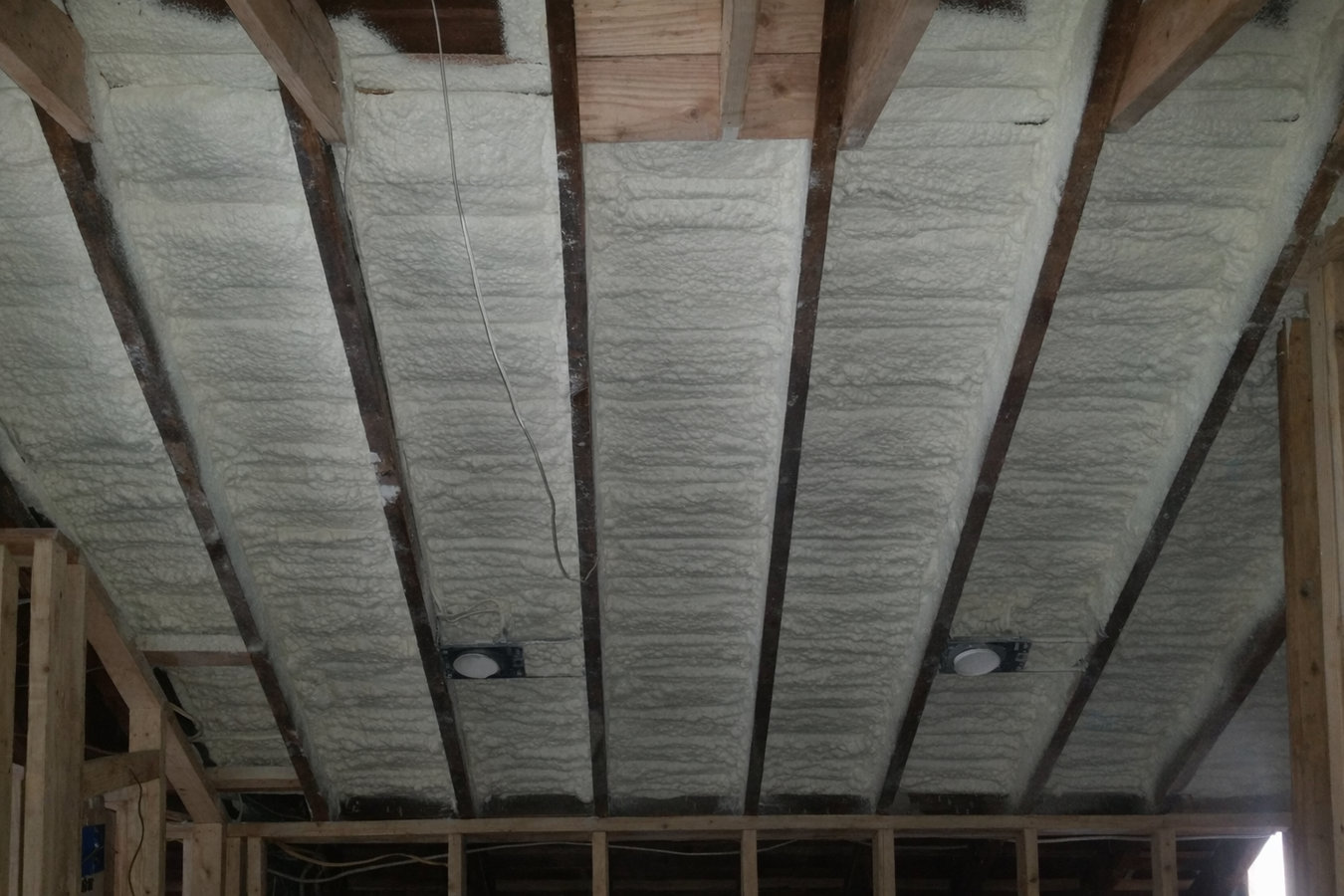
Closed-cell spray foam insulates and seals air leaks in a single step - making it the most effective solution for Altoona crawl spaces, rim joists, and older homes losing heat through the floor.
Closed-cell foam insulation in Altoona starts as a liquid and expands into a dense, rigid material that insulates and seals air leaks at the same time - most residential jobs in a crawl space or rim joist are completed in a single day.
Unlike fiberglass batts, which trap air but do not stop it from moving through gaps and cracks, closed-cell foam hardens in place and fills every void it contacts. That combination of high insulating value per inch and complete air sealing is why it performs so well in the tight, irregular spaces common in Altoona's older homes. It also resists moisture, which makes it the material of choice for crawl spaces and rim joists in a climate like Blair County's.
Closed-cell foam is frequently installed alongside open-cell foam insulation in other areas of the same home, since each material has strengths that suit different locations. If you are unsure which is right for your situation, we walk through that during the estimate.
If your gas or oil bill has crept up over the past few winters without changes to your thermostat or home size, your home is likely losing heat faster than it should. In Altoona's long heating season, a poorly insulated crawl space or rim joist can account for a surprisingly large share of that loss. This is one of the most common reasons homeowners in older Altoona neighborhoods call an insulation contractor.
Cold floors above a crawl space or unheated basement are a direct sign that cold air is moving up from below. In Altoona's older homes, crawl spaces are often uninsulated or have deteriorated fiberglass batts that have fallen away from the floor joists over the years. If you notice the difference between standing near an interior wall and an exterior wall in January, your home's thermal envelope has a gap.
Altoona's terrain and older drainage infrastructure mean that crawl spaces in many neighborhoods stay damp, especially after spring snowmelt or heavy rain. If you have ever noticed standing water, damp insulation, or a musty smell drifting into the living area above, that moisture is working against your home's structure and air quality. Closed-cell foam applied to crawl space walls and floor joists creates a barrier that limits how much of that moisture reaches your living space.
Ice dams - the ridges of ice that form at the roof edge after heavy snowfall - are caused by heat escaping through the attic and melting snow unevenly. In Altoona, where multi-day cold snaps are common and snowfall is significant, ice dams can damage gutters, fascia, and interior ceilings if meltwater backs up under shingles. If you have seen this happen on your roof, it is a strong signal that your attic insulation and air sealing need attention.
Closed-cell foam works in almost any location where insulation and air sealing need to happen together - but the highest-return applications in Altoona homes are crawl spaces, rim joists, and basement walls. The rim joist - the framing strip sitting right above your foundation - is one of the single biggest sources of cold-air infiltration in a typical older home, and a few inches of closed-cell foam there makes a disproportionate difference in how the floor above feels in winter. For homeowners also looking at full spray foam insulation throughout the house, we can map out a phased plan that starts with the spaces delivering the biggest immediate impact.
We also install closed-cell foam at attic rafters for homeowners converting to a conditioned attic space, and at exterior wall cavities during renovation work where the walls are already open. Because the foam conforms to irregular surfaces, it works in spaces where rigid foam boards cannot - including the stone and brick foundation walls common in Altoona's pre-1950 housing stock. Many homeowners also pair crawl space foam with open-cell foam insulation in interior wall cavities above for a whole-home approach.
Best for homes where moisture resistance and a high R-value per inch are the top priorities in the under-floor space.
Targets the high-impact framing gap above your foundation - one of the most cost-effective spots to insulate in any home.
Suited for homes converting to a conditioned attic or needing combined insulation and air sealing in the roof assembly.
Ideal for basement walls with irregular surfaces - stone, brick, or uneven poured concrete - where rigid boards cannot conform.
Altoona sits in the Ridge and Valley region of central Pennsylvania, where winter temperatures regularly drop into the single digits and the heating season runs from October through April. Homes here work hard to stay warm, and any gap in insulation or air sealing gets felt immediately in energy bills. Closed-cell foam is particularly well-suited to this climate because it handles both heat loss and moisture at the same time - two problems that tend to travel together in cold, wet Pennsylvania winters. The EPA and the Spray Polyurethane Foam Alliance both publish guidance on proper installation and safety practices for homeowners considering this material.
A large share of Altoona's homes were built between the 1880s and the 1950s - a period when balloon-frame wall construction was common and wall cavities ran continuously from the basement to the attic, creating hidden channels for cold air and moisture. Closed-cell foam applied to rim joists, crawl space walls, and attic knee walls can dramatically reduce that air movement without requiring a full gut renovation. Homeowners in Ebensburg and Johnstown face similar conditions - older housing stock, significant heating loads, and the kind of moisture concerns that make a moisture-resistant material worth the higher upfront cost.
When you reach out, we ask what area you are concerned about, whether you have noticed any specific problems, and roughly how old your home is. Most Altoona contractors can schedule an in-home visit within a few days. You do not need to prepare anything for this first call.
We walk through your crawl space, basement, or attic and check for moisture, structural issues, and anything that needs to be addressed before foam goes in. This visit takes 30 to 60 minutes, and you receive a written estimate before we schedule installation.
For most closed-cell foam jobs in Altoona involving conditioned spaces, we pull the required building permit before work begins. We handle this for you - you should not need to visit the permit office. Once the permit is in hand, we schedule your installation date.
Most residential jobs in a crawl space or basement are completed in a single day. Plan to be out of the treated area for several hours after spraying. After the job, a city inspector verifies the work as part of the permit process. Once that is done, the foam is in place for the life of the building.
Free written estimate - no obligation. We respond within one business day.
(814) 552-1335We pull the required building permit from the City of Altoona before work begins and coordinate the city inspection after the job is done. That independent sign-off confirms the work meets current standards - not just our word that it does.
Spray Polyurethane Foam AllianceAltoona's neighborhoods in the Juniata and South Side areas are known for damp crawl spaces and wet basement walls after wet springs. We check for moisture during every estimate and do not spray foam over an active problem - that just traps it.
Spray foam requires precise temperature conditions and technique to cure correctly. Patchy, uneven, or improperly adhered foam is a sign the installer moved too fast or the conditions were not right. We use trained installers who know how to read the material and the space.
Every closed-cell foam job starts with a free written estimate that spells out materials and labor. We document the finished work so you have a clear, verifiable record before and after we touch a single surface in your home.
Spray foam done right stays in place for the life of the building. Spray foam done poorly is expensive to fix and can trap moisture where you cannot see it. The difference comes down to who you hire and how seriously they take the assessment before the first drop of foam is ever mixed.
A softer, more affordable spray foam option suited for interior wall cavities and soundproofing applications.
Learn MoreLearn how spray foam compares to traditional insulation materials and where it delivers the best return.
Learn MoreWe are booking installations now - schedule before the heating season starts and feel the difference this winter.